 Hindi
Hindi Home
Home Syllabus
 About Us
 Contact Us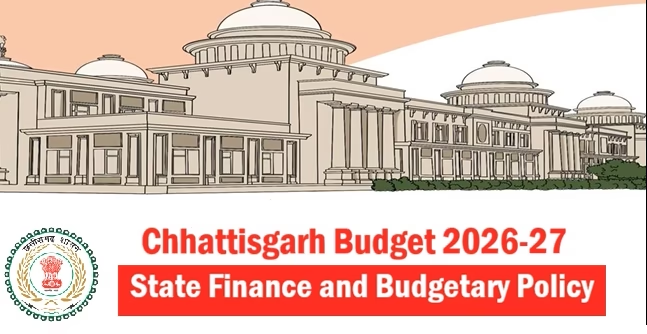
For Basics of State Finance and Budget, please go through Fiscal Policy: Budget, Fiscal Deficit, Public Debt.
Chhattisgarh Government has unveiled its ambitious Budget for the financial year 2026-27, reflecting a strong commitment to fulfil the Chhattisgarh Anjore 2047 targets and to enhance the development achieved for sustainable development of the state.
While the budget of the previous 2 years focused on the theme of GYAN (Gareeb, Yuva, Annadata & Nari) in 2024-25 followed by GYAN ke liye GATI (Good Governance, Accelerating Infrastructure, Technology, Industrial Growth), this year’s budget is based on SANKALP theme. It has 5 new missions also.
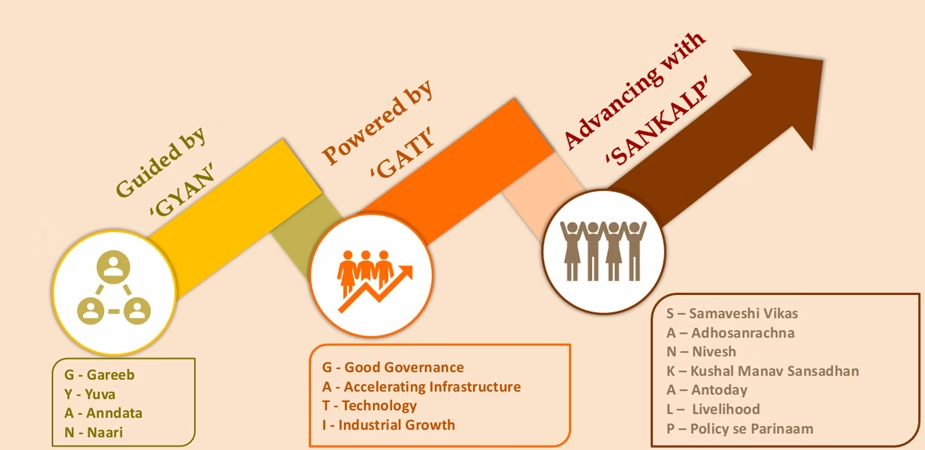
This year’s budget is for the SANKALP of making Chhattisgarh more prosperous.
SANKALP Budget
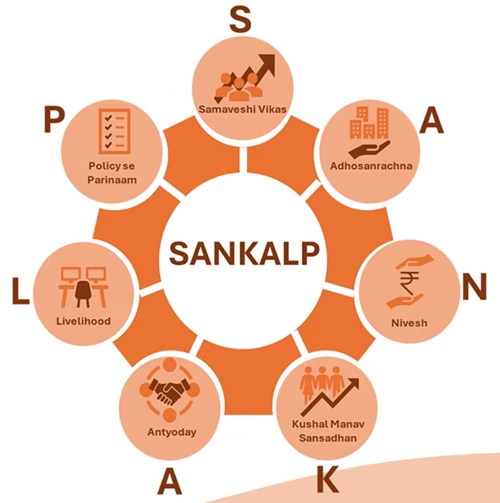
- S: समावेशी विकास (Sustainable Development)
- A: अधोसंरचना (Infrastructure)
- N: निवेश (Investment)
- K: कुशल मानव संसाधन (Skilled Human Resources)
- A: अंत्योदय (Upliftment of the Marginalized)
- L: लाईवलीहुड (Livelihood)
- P: पॉलिसी से परिणाम तक (Policy to Results)
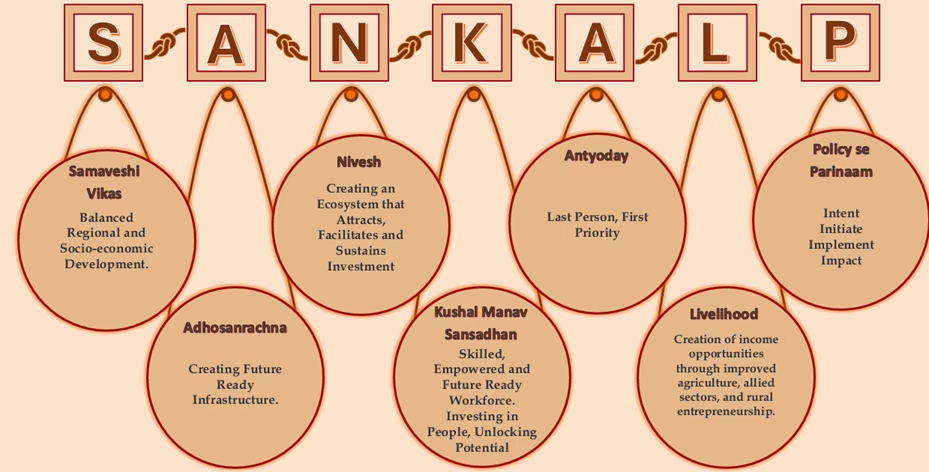
1. S: समावेशी विकास (Sustainable Development): Balanced regional and socio-economic development
- Sustainable Development is not only the need of time, but it the fundamental principal of Chhattisgarh’s progress.
- This budget ensures that development reaches every community, especially Scheduled Tribes, Scheduled Castes, backward classes, farmers, youth, and women, while addressing regional imbalances.
2. A: अधोसंरचना (Infrastructure): Creating future ready infrastructure
- Strong infrastructure is the backbone of economic growth and it will further improve the living standards of the state’s people.
- Important provisions have been made to develop infrastructure in the areas of roads, irrigation, electricity, urban development, and digital connectivity.
3. N: निवेश (Investment): Creating an ecosystem that attracts, facilitates and sustain investment
- The budget creates a favorable environment for industrial development and private investment.
- Through policy support, incentives, and ease of doing business, economic activities and employment generation will be accelerated.
4. K: कुशल मानव संसाधन (Skilled Human Resources): Skilled, empowered and future ready workforce, investing in people, unlocking potential
- The budget has given special emphasis on education, skill development, and capacity building, so that the youth can acquire employment-oriented skills in health, industry, IT, tourism, and new emerging sectors.
- This initiative will further strengthen the state’s human capital base.budget.
5. A: अंत्योदय (Upliftment of the Marginalized): Last person first priority
- Through targeted welfare programs for the weak and disadvantaged sections, it has been ensured that the benefits of development reach the last person in society.
- Priority has been given to social security and the availability of essential services.
6. L: लाईवलीहुड (Livelihood): Creation of income opportunities through improved agriculture, allied sectors and rural entrepreneurship
- Emphasis has been laid on strengthening agriculture and related sectors, handicrafts, and rural enterprises, modernizing them, creating new livelihood opportunities, and increasing income.
- Special provisions have been made to empower livelihood resources in Bastar and Sarguja.
7. P: पॉलिसी से परिणाम तक (Policy to Results): Intent, Initiate, Implement, Impact
- This budget is based on Intent, Initiative, Implement and Impact.
- Through which reforms have been identified and ensured in various sectors.
5 New Missions (नई दिशा, नई धार, नई रफ्तार): to work in the identified fields in mission mode
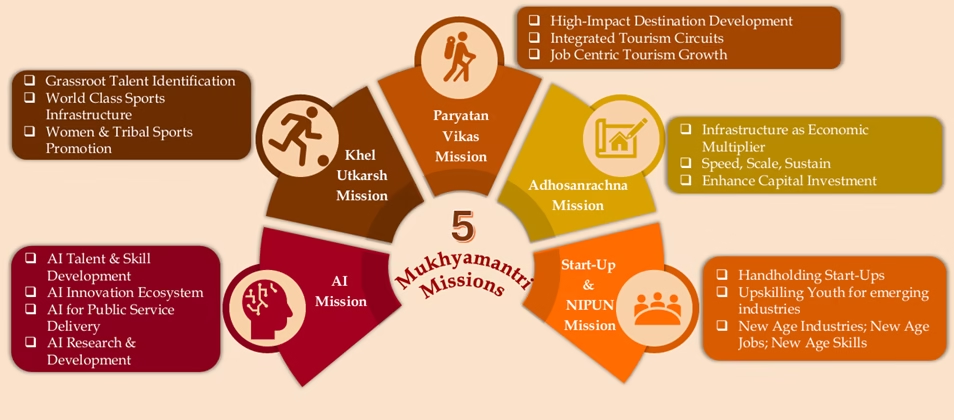
- Mukhyamantri AI Mission: promotion of AI Start Ups, skill training to the youth and use of AI in administration, agriculture and industries
- Mukhyamantri Khel Utkarsh (खेल उत्कर्ष) MIssion: identifying sports talent and to provide best training, encouragement and modern sports infrastructure in order to prepare sports persons for national-international level performance.
- Mukhyamantri Paryatan Vikas (पर्यटन विकास) Mission: identification and development of theme based tourists sites. It would improve the local livelihood conservation.
- Mukhyamantri Adhosanrachna (अधोसंचना) Mission: a clear infrastructure development roadmap through gap analysis of available infrastructure
- Mukhyamantri Start Up and NIPUN Mission: technical, financial and structural assistance to start ups to make the youth job-creator rather than job-seeker.
- New Age Industrial Preparedness for Upskilling New Generation Youth-NIPUN Mission would prepare the youth for the new opportunities by providing them industry compatible skills.
Chhattisgarh Budget Analysis (2026-27)
Budget Highlights:
- The Gross State Domestic Product (GSDP) is estimated to be Rs 7.09 Lakh Crore which is 12.3% higher than 2025-26 (BE). It has increased substantially from 5,705 Crores in 2001-02.
- The Fiscal Deficit is estimated to be Rs 20,400 Crore which is 2.88% of GSDP. This is within the limit of 3% set in the FRBM Act.
- The Capital Expenditure is estimated to be Rs 26,500 Crore which slighly higher than 2025-26 (BE) and Capex to GSDP is 3.7% (4.1% in 2025-26 (BE)). Chhattisgarh is among the top states with high capex to GSDP ratio.
- Total revenue deficit estimated in the year is of Rs 2,000 Crores. Chhattisgarh is among the progressive states which maintain a low revenue deficit status.
- As a result of positive efforts made to increase the revenue of the state, State’s own revenue is estimated to be increased slightly over that of 2025-26 (BE) to Rs 77,000 crore in 2026-27.
| Head | 2025-26 (Estimate-BE) | 2026-27 (Estimate-BE) |
| Gross State Domestic Product (GSDP) | 6.31 Lakh Crore | 7.09 Lakh Crore 12.3% higher than 2025-26 (BE) |
| Net Expenditure | 1.65 Lakh Crore | 1.72 Lakh Crore 4.0% higher than 2025-26 (BE) |
| Capital Expenditure | 26.3k Crore | 26.5k Crore |
| Capex to Budget | 16% | 15.4% |
| Capex to GSDP | 4.1% | 3.7% |
| Revenue Expenditure | 1.38 Lakh Crore | 1.45 Lakh Crore 5.0% increase over 2025-26 (BE) |
| Loans and Advances | 463 Crore | 500 Crore 8.0% higher than 2025-26 (BE) |
| Net Receipts | 1.651 Lakh Crore | 1.72 Lakh Crore 4.0% higher than 2025-26 (BE) |
| Capital Receipts | 24.1k Crore | 29.0k Crore 20.3% lower than 2025-26 (BE) |
| Revenue Receipts | 1.41 Lakh Crore | 1.43 Lakh Crore |
| Revenue Balance (-) Deficit | (+) Rs 2.8k Crore (+) 0.4% of GSDP | (-) Rs 2.0k Crore (-) 0.28% of GSDP |
| Fiscal Balance (-) Deficit | (-) Rs 22.9k Crore (-) 3.6% of GSDP (-) 2.91 of GSDP* (Net) | (-) Rs 27.9k Crore (-) 3.9% of GSDP (-) 2.88% of GSDP* (Net) |
| Primary Balance (-) Deficit | (-) Rs 13.4k Crore (-) 2.1% of GSDP | (-) Rs 16.9k Crore (-) 2.3% of GSDP |
Source: Summary of the Budget 2026-27 | Main Budget 2026-27 | Press Note
*This includes provision of 8,500 Cr for Special Central Assistance for Capex. Net Fiscal Deficit after deducting SCA as per GoI Guidelines is 20,400 Cr, which is 2.88% of GSDP 2026-27.
Policy Highlights: Flagship Schemes
- Mukhyamantri Krishi Unnati Yojna to modernize and diversify agriculture: 10,000 Crore
- Mahtari Vandan Yojna to provide financial assistance to women: 8,200 Crore
- Mukhyamantri Khadyann Sahayata Yojna to provide rice, gram, sugar and salt: 6,500 Crore
- Energy subsidy to provide free electricity to agricultural pumps up to 5 HP, single electricity connection households and half electricity bill up to 200 Units: 6,700 Crore
- Pradhanmantri Avas Yojna (Gramin): 4,000 Crore
- Jal Jeevan Mission (JJM): 3,000 Crore
- National Health Mission (NHM): 2,000 Crore
- Pradhanmantri Gram Sadak Yojna (PMGSY): 1,725 Crore
- Shaheed Veer Narayan Singh Ayushman Swasthya Yojna for free medical treatment: 1,500 Crore
- Samagra Shiksha Abhiyan: 1,500 Crore
- PM-JANMAN Yojna for development of PVTGs: 720 Crore
New Schemes:
- Viksit Bharat G RAM G Yojna: Rs 4,000 Crore for providing 125 days of employment in rural areas to create infrastructure and public utilities.
- Mukhyamantri Adarsh Shahar Samriddhi Yojna (मुख्यमंत्री आदर्श शहर समृद्धि योजना): Rs 200 Crore for basic infrastructure, citizen services and cleaniness in urban areas.
- Mukhyamantri Drutgami Sadak Sampak Yojna (मुख्यमंत्री द्रुतगामी सड़क संपर्क योजना): Rs 200 Crore for the construction of expressway roads.
- Swami Vivekanand Utkrishth Shala Yojana (स्वामी विवेकानंद उत्कृष्ठ शाला योजना): Rs 100 Crore to improve the quality of education.
- Cashless Medical Facilities: Rs 100 Crore for cashless medical facilities of government employees.
- Chhattisgarh Assistance for Competitive Exams (CG ACE): Rs 33 Crore to provide financial assistance for competitive exams. It has 3 components- Udaan (NEET/JEE/CLAT), Shikhar (UPSC/CGPSC), Manjil (Railway/Banking/SSC)
- Chhattisgarh Viability Assistance for Yatri Udaan (CG VAYU): Rs 30 Crore for encouraging flight services at Bilaspur, Jagdalpur and Ambikapur.
- Rani Durgavati Yojna: Rs 15 Crore for providing Rs 1.5 Lakh to a girl child completing 18 years of age.
- Mukhyamantri Shiksha Sahyog Yojna (मुख्यमंत्री शिक्षा सहयोग योजना): Rs 10 Crore for providing rental assistance to student.
- Lakhpati Didi Bhraman Yojna (लखपति दीदी भ्रमण योजना): This year will be celebrated as Mahtari Gaurav Varsh (महतारी गौरव वर्ष). A provision of Rs 5 Crore has been made for exposure visit of Lakhpati Didi to visit industries and Shakti Peeths.
- Mukhyamantri Astha Path (Shakti Peeth) Yojna (मुख्यमंत्री आस्था पीठ (शक्ति पीठ) योजना): Rs 5 Crore to promote religious tourism of 5 Shakti Peeths.
- Chhattisgarh Yuva Darshan Yojna (छत्तीसगढ़ युवा दर्शन योजना): Rs 5 Crore for school studetns’ educational tours of important historical and cultural centres of the state.
New Initiatives:
- Education city at Abujhmad and Jagargunda: Rs 100 Crore
- 23 new industrial parks: Rs 250 Crore
- Land Bank Vikas Yojna: Rs 200 Crore
- Electronics Manufacturing Cluster 2.0: Rs 100 Crore
- Sirpur Vikas Yojna: Rs 42 Crore
- Mukhyamantri Helpline: Rs 22 Crore
- Tribal Surgudi (जनजातीय सुरगुड़ी): studio for recording and publicity of tribal music and culture.
- 5 New Mission: Rs 100 each year
Chhattisgarh’s Economy
- Gross State Domestic Product (GSDP): Chhattisgarh Gross State Domestic Product (GSDP) at current prices is has increased from 6,31,290 Crore to 7,09,553 Crore, marking a growth on 12.3% higher than 2025-26 (BE).
- Per Capita Income: In 2025-26, per capita income is expected to grow by to Rs 1.79 lakh per annum which is lower than national per capita income of Rs 2,00,162 per annum (2024-25).
Sectoral Contribution in GSDP (FY 2025-26) (at constant price)
| Factor | Chhattisgarh | India (2024-25) |
| Per Capita Income | Rs 1,79,244 | Rs 2,00,162 |
| Per Capita Income growth rate | 10.07% | 8.66%. |
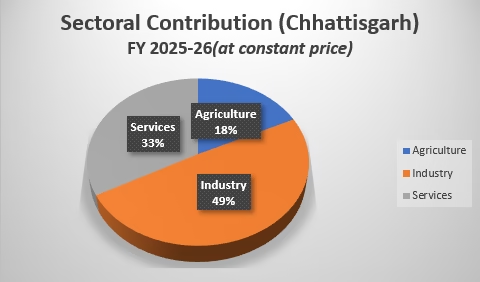
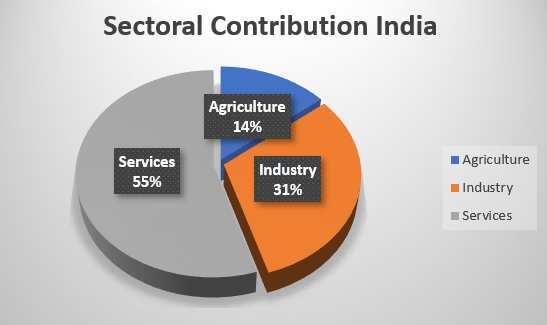
- Sectors: In 2025-26 at constant price (2011-12), Agriculture sector is projected to grow by 7.49%, Industrial sector by 7.21% and Service sector by 9.11%.
- In 2025-26 at constant price, the contribution in GSDP by Agriculture sector is 16.2% compared to 14.16% at national level, Industrial sector is 44.8% compared to 30.97% at national level and Service sector is 35% compared to 54.62% at national level. There is a focus of the Government to increase the contribution of service sector in the GSDP.
Sectoral Contribution in GSDP (FY 2025-26)(at constant price)
| Sector | Chhattisgarh | India (2024-25) |
| Agriculture | 16.2% | 14.16% |
| Industry | 44.8% | 30.97% |
| Services | 29.9% | 54.62% |
Sectoral Growth (FY 2025-26) (at constant price 2011-12)
| Sector | Chhattisgarh | India (2024-25) |
| Agriculture | 7.49% | 3.76% |
| Industry | 7.21% | 6.22% |
| Services | 9.11% | 7.22% |
Source: Macroeconomic Framework statement
Receipts
Revenue Receipts (राजस्व प्राप्तियाँ):
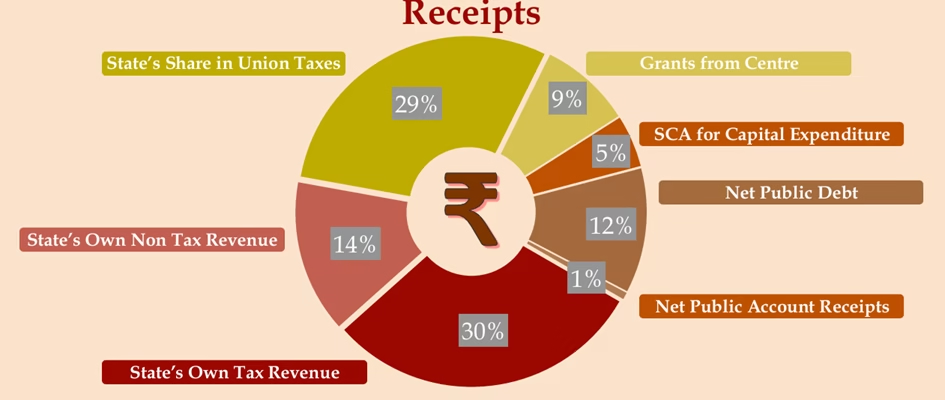
- The total revenue receipts for 2026-27 are estimated to be Rs 1,43,000 Crore (10.4% increase over 2025-26 (RE)). Of this Rs 77,000 Crore (53.8% of the revenue receipts) will be raised through State’s own resources and Rs 66,000 Crore (46% of the revenue receipts) from central transfers, i.e. State’s share in central taxes (35.6%) and grants-in-aid (10.4%) from the central government.
- State’s own revenue: Rs 77,000 Crore will be raised through State’s own resources (10.8% of GSDP). State’s own tax revenue is estimated to be Rs 52,000 Crore in 2026-27, an increase of 14% over that of 2025-26 (RE). State’s non-tax revenue is estimated to be Rs 25,000 Crore, an increase of 19% over that of 2025-26 (RE).
Capital Receipts (पूंजीगत प्राप्तियाँ):
- The main items of capital receipts public debt (लोक ऋण) is estimated to be Rs 27,900 Crore (10% higher than 2025-26 RE) which include market borrowings and from Banks, loans received from foreign governments.
- The total capital receipts for 2026-27 are estimated to be Rs 29,000 Crore which is 9.4% higher than 2025-26 (RE)
- The receipts from public account include small savings (Post-Office Savings Accounts, National Savings Certificates, etc), provident funds and net receipts obtained from the sale of shares in Public Sector Undertakings (PSUs). They are estimated to be Rs 1,000 Crore in 2026-27 (same as 2025-26 RE).
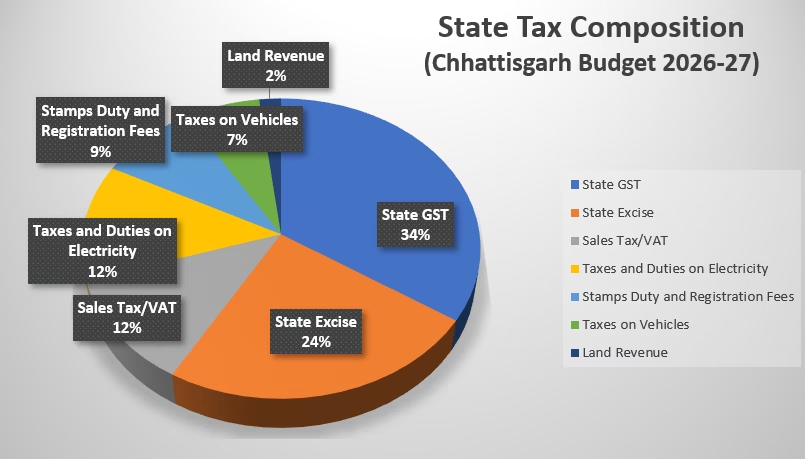
The major sources of State’s own tax revenue are:
| Head | 2025-26 (Revised-RE) | 2026-27 (Estimate-BE) |
| State GST | 14.74k Crore | 17.78k Crore 20.6% higher than 2025-26 (RE) |
| State Excise | 11.5k Crore | 12.5k Crore 8.7.0% higher than 2025-26 (RE) |
| Sales Tax/VAT | 6.2k Crore | 6.1k Crore |
| Taxes and Duties on Electricity | 5.8k Crore | 6.5k Crore 12% higher than 2025-26 (RE) |
| Stamps Duty and Registration Fees | 3.2k Crore | 4.5k Crore 40.6% higher than 2025-26 (RE) |
| Taxes on Vehicles | 3.0k Crore | 3.5k Crore 16.6% higher than 2025-26 (RE) |
| Land Revenue | 1.0k Crore | 1.0k Crore |
Source: Details of Revenue Receipts
Expenditure
Capital Expenditure (पूंजीगत व्यय):
- Capital expenditure for 2026-27 is proposed to be Rs 26,500 Crore (62.0% increase over 2025-26 RE) which include expenditure affecting the assets and liabilities of the state, such as: (i) capital outlay, i.e. expenditure which leads to creation of assets (such as bridges and hospitals), and (ii) repayment and grant of loans by the state government.
- Debt Servicing (Debt Repayment) for 2026-27 constitutes about Rs 12,300 Crore (7% of Total Expenditure).
Revenue Expenditure (राजस्व व्यय):
- Revenue expenditure includes payment of salaries, pension, subsidies, grant and interest etc.
- Revenue expenditure for 2026-27 is proposed to be Rs 1,45,000 Crore (4.0% increase over 2025-26 RE)
- Debt Servicing (Interest Payments) for 2026-27 constitutes about Rs 11,000 Crore towards making interest payments (ब्याज भुगतान).
- Committed expenditure: Committed expenditure of a state typically includes expenditure on payment of salaries, pensions, and interest. In 2026-27, Chhattisgarh is estimated to spend Rs 55.8k Crore on committed expenditure, which is 39% of estimated revenue receipts.
| Committed Expenditure | 2025-26 (Revised-RE) | 2026-27 (Estimate-BE) |
| Salary | 33.0k Crore | 35.8k Crore (25% of revenue receipts) |
| Pension | 9.0k Crore | 9.0k Crore (6.3% of revenue receipts) |
| Interest Payments | 10.3k Crore | 11.0k Crore (7.7% of revenue receipts) |
| Total | 52.28k Crore (40% of total receipts) | 55.8k Crore (39% of revenue receipts) |
Loans and Advances (ऋण एवं अग्रिम):
- Loans and Advancers for 2026-27 is estimated to be Rs 500 Crore which is 150% higher than 2025-26 (RE).
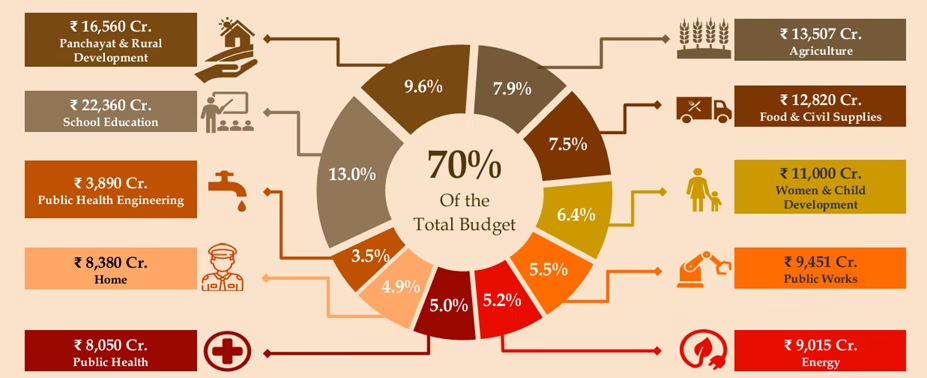
Sector-wise Budget Allocation
Public Debt Composition
Constitutional Provisions:
- Article 292: Government of India can borrow amounts specified by the Parliament from time to time.
- Article 293: State Governments in India can borrow only from internal sources.
Thus, the Government of India incurs both external and internal debt, while State Governments incur only internal debt.
Public Debt: Debt contracted against the guarantee of Consolidated Fund of India or State (defined as Public Debt)
- Internal debt: owed to lenders within the country.
- The government borrows by issuing the Government Bonds and T-Bills (Treasury Bills).
- Securities issued to International Financial Institutions
- Borrowing from RBI under Market Stabilization Scheme (MSS) Bonds for sterilization operations
- External debt: owed to creditors outside the country
- The outsider creditors can be foreign governments, International Financial
Institutions such as World Bank, Asian Development Bank etc., corporate and
foreign private households. - External debt may be of several kinds such as multilateral, bilateral, IMF loans, Trade
credits, External commercial borrowings etc. - When the non-resident Indians park their funds in India, it is also a type of external debt and
is called NRI deposits.
- The outsider creditors can be foreign governments, International Financial
Public Debt (लोक ऋण) (Chhattisgarh)
| Details | 2025-26 (RE) | 2026-27 (BE) |
| Receipts | 36.7k Crore | 40.2k Crore |
| Repayment | 11.3k Crore | 12.3k Crore |
| Net Public Debt | 25.4k Crore | 27.9k Crore |
Other Liabilities: Liabilities in the Public Account (called as Other Liabilities)
- Liabilities on account of Provident Funds
- Reserve Funds and Deposits, Other Accounts, etc
- Securities issued against ‘Small Savings’: All deposits under small savings schemes are credited to the National Small Savings Fund (NSSF). The balance in the NSSF (net of withdrawals) is invested in special Government securities.
Public Account (लोक लेखा) (Chhattisgarh)
| Details | 2025-26 (RE) | 2026-27 (BE) |
| Receipts | 3.76 Lakh Crore | 3.82 Lakh Crore |
| Repayment | 3.75 Lakh Crore | 3.81 Lakh Crore |
| Net Other Liabilities | 1.0k Crore | 1.0k Crore |
Outstanding Liabilities:
Outstanding liabilities is the accumulation of total borrowings at the end of a financial year; it also includes any liabilities on Public Account.
Outstanding Liabilities (Chhattisgarh)
| Details | 2022-23 | 2023-24 | 2024-25 | 2025-26 (RE) |
| Outstanding liabilities | 1.01 Lakh Crore | 1.34 Lakh Crore | 1.53 Lakh Crore | 1.79 Lakh Crore |
Source: Components of Outstanding Liabilities | Budget Summary

Economy of India and Chhattisgarh